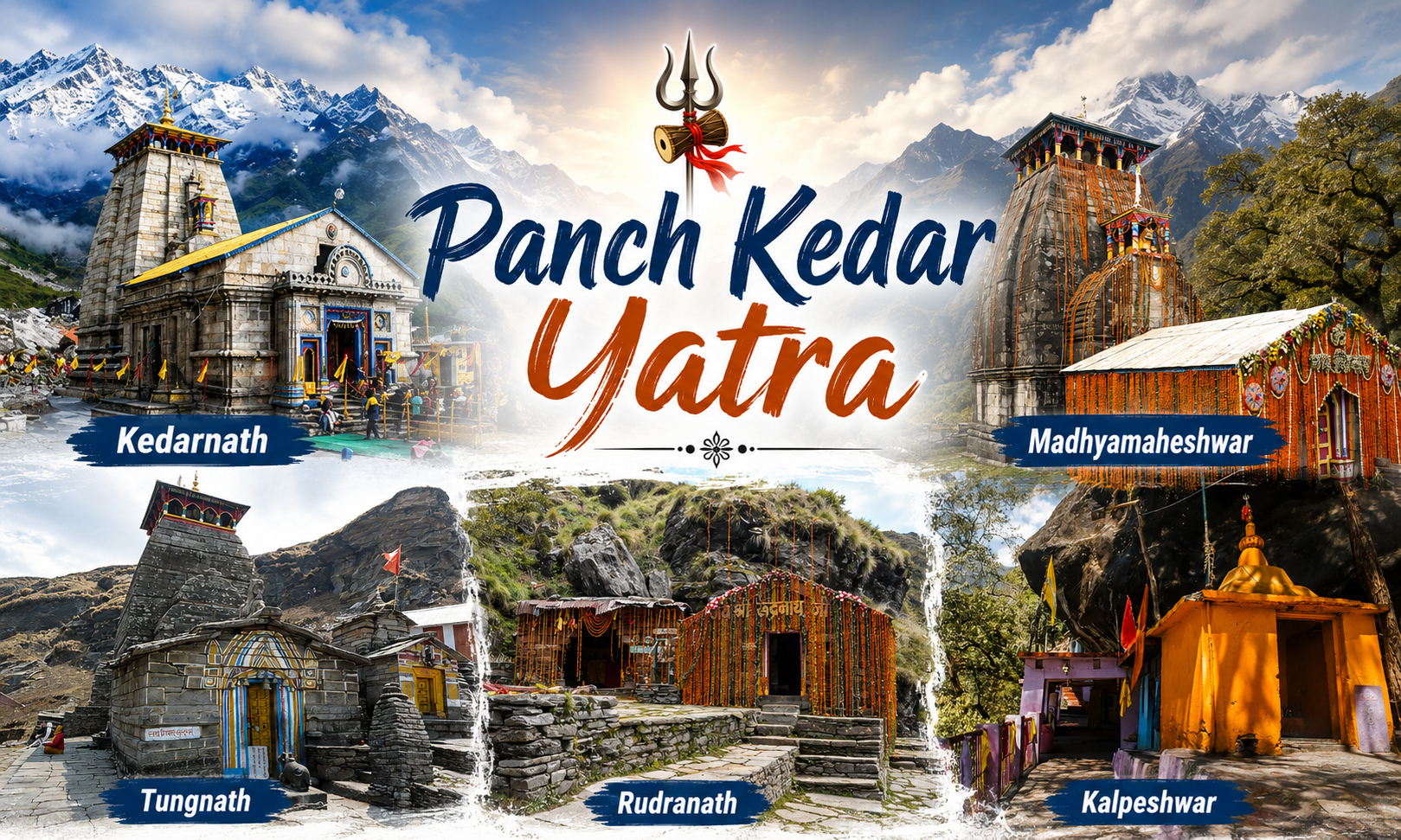
The Panch Kedar Yatra is one of the most revered spiritual journeys in Uttarakhand. Nestled amidst the majestic Garhwal Himalayas, the pilgrimage takes devotees through five sacred temples dedicated to Lord Shiva. Unlike many traditional pilgrimages, Panch Kedar combines spirituality, adventure, breathtaking mountain landscapes, and ancient mythology.
Every year thousands of devotees, trekkers, and spiritual seekers undertake the Panch Kedar pilgrimage to experience divine blessings and witness the natural beauty of Uttarakhand. The journey involves visiting five holy temples—Kedarnath, Madhyamaheshwar, Tungnath, Rudranath, and Kalpeshwar—each associated with a different manifestation of Lord Shiva.
What is Panch Kedar?
The term Panch Kedar means “Five Kedars.” These five temples are dedicated to Lord Shiva and are located in different parts of the Garhwal region of Uttarakhand.
According to Hindu mythology, after the Mahabharata war, the Pandavas sought forgiveness from Lord Shiva for the sins committed during the battle. Shiva, unwilling to meet them, took the form of a bull and disappeared into the earth. Different parts of his body appeared at five different locations, which later became the Panch Kedar temples.
The five temples collectively form the sacred Panch Kedar pilgrimage circuit:
- Kedarnath
- Madhyamaheshwar
- Tungnath
- Rudranath
- Kalpeshwar
Completing the Panch Kedar Yatra is considered highly auspicious and spiritually rewarding.
History and Significance of Panch Kedar
The history of Panch Kedar is deeply rooted in Hindu mythology and the epic Mahabharata.
After winning the Kurukshetra war, the Pandavas were burdened with guilt for killing their relatives and teachers. To seek redemption, they searched for Lord Shiva. Shiva avoided them and took refuge in the Himalayas disguised as a bull.
When Bhima recognized the bull, Shiva disappeared into the ground. Different body parts of the bull emerged at five different places:
- Hump at Kedarnath
- Navel at Madhyamaheshwar
- Arms at Tungnath
- Face at Rudranath
- Hair (Jata) at Kalpeshwar
The Pandavas built temples at these sacred locations and worshipped Lord Shiva to attain salvation.
Spiritual Importance
The Panch Kedar temples symbolize:
- Forgiveness and redemption
- Devotion and faith
- Spiritual purification
- Connection with nature and divinity
Many devotees believe that completing the Panch Kedar Yatra helps cleanse past karmas and brings inner peace.
Names of the Five Panch Kedar Temples
- Kedarnath Temple
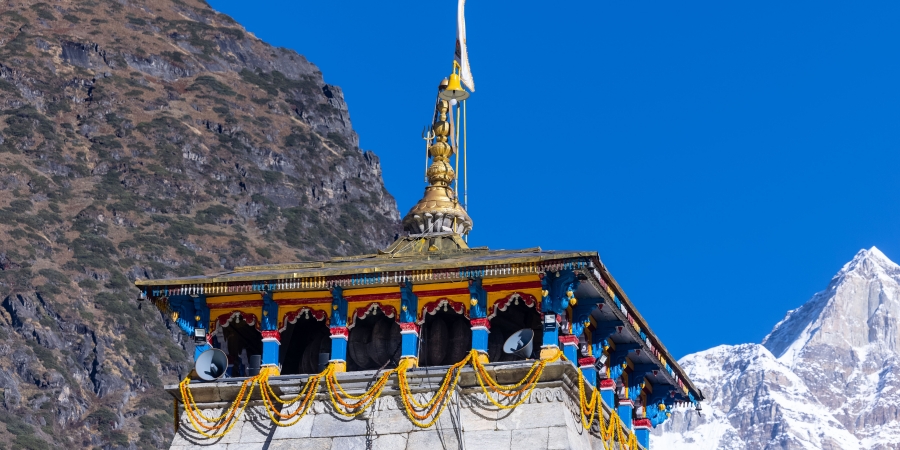
Located at an altitude of approximately 3,583 meters, Kedarnath is the most famous among the Panch Kedar temples.
Highlights:
- One of the twelve Jyotirlingas
- Surrounded by snow-capped peaks
- Ancient stone architecture
- Major Char Dham pilgrimage destination
- Madhyamaheshwar Temple
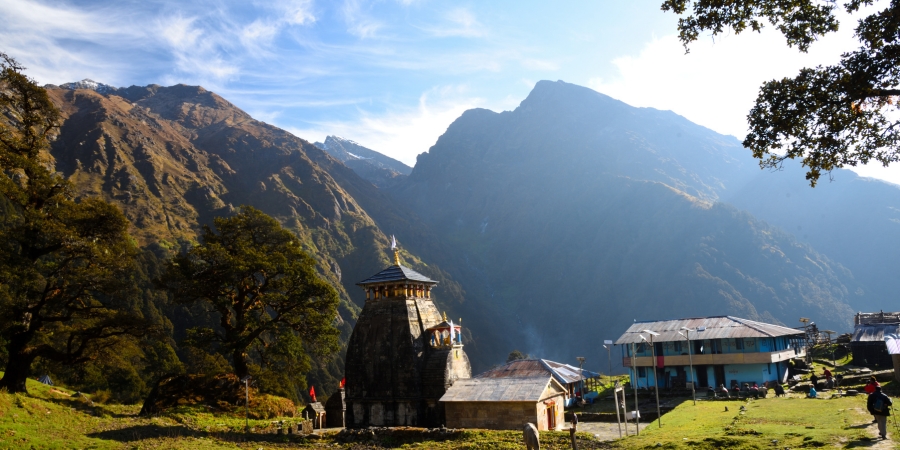
Situated at around 3,497 meters, this temple represents Lord Shiva’s navel.
Highlights:
- Beautiful Himalayan views
- Peaceful atmosphere
- Moderate trekking route
- Stunning sunrise scenery
- Tungnath Temple
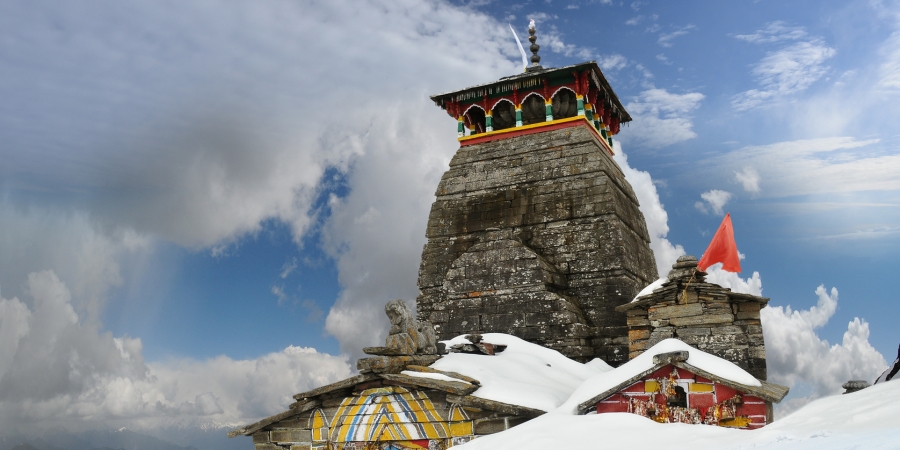
Tungnath is the highest Shiva temple in the world.
Highlights:
- Altitude of 3,680 meters
- Easy trekking route
- Popular among adventure enthusiasts
- Gateway to Chandrashila Peak
- Rudranath Temple
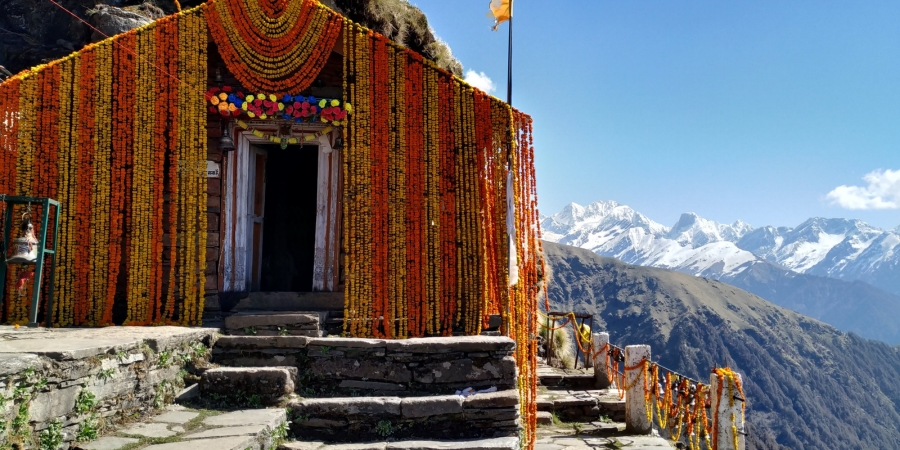
Rudranath represents Lord Shiva’s face.
Highlights:
- Dense forests and alpine meadows
- Challenging trek
- Highly spiritual atmosphere
- Spectacular mountain landscapes
- Kalpeshwar Temple
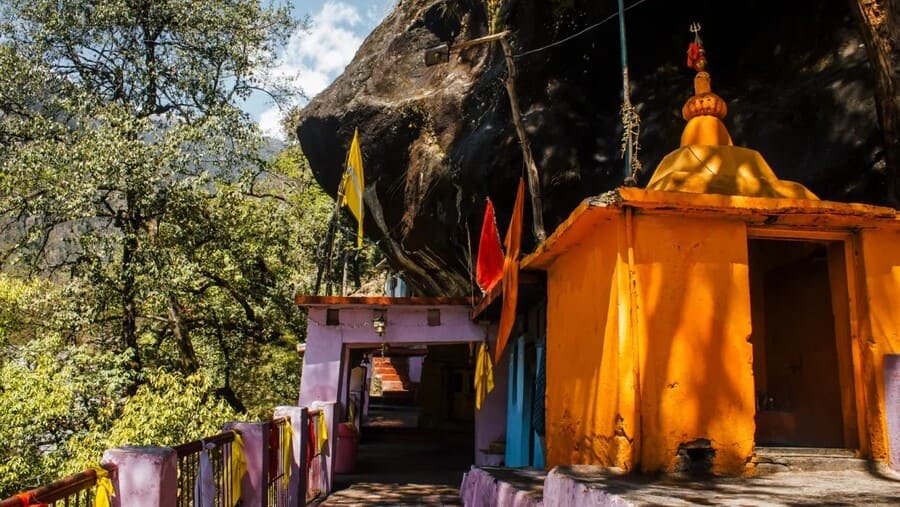
Kalpeshwar is the only Panch Kedar temple accessible throughout the year.
Highlights:
- Represents Lord Shiva’s hair
- Located in Urgam Valley
- No major trekking difficulties
- Ideal for all age groups
Why Are the Panch Kedar Temples Famous?
The Panch Kedar temples attract pilgrims and trekkers for several reasons:
Religious Importance
- Strong connection with Mahabharata.
- Dedicated to Lord Shiva.
- Ancient spiritual heritage.
Scenic Himalayan Beauty
Visitors experience:
- Snow-capped peaks
- Dense forests
- Alpine meadows
- Mountain villages
- Rivers and waterfalls
Adventure Trekking
The Panch Kedar route includes some of the most beautiful treks in Uttarakhand, making it ideal for both spiritual travelers and adventure enthusiasts.
Cultural Heritage
Pilgrims get an opportunity to explore the rich traditions and culture of the Garhwal Himalayas.
Panch Kedar Temple Opening & Closing Dates 2026
| Temple | Opening Date | Closing Date* |
| Kedarnath | 22 April 2026 | 11 November 2026 |
| Tungnath | 2 May 2026 | Early November 2026 |
| Rudranath | 18 May 2026 | October/November 2026 |
| Madhyamaheshwar | 21 May 2026 | 20 November 2026 |
| Kalpeshwar | Open Throughout the Year | Open Throughout the Year |
Best Time to Visit Panch Kedar
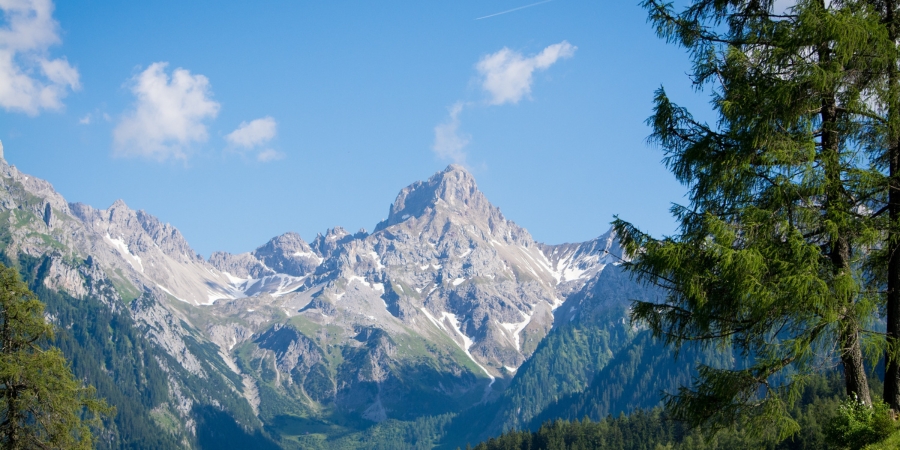
The ideal time for the Panch Kedar Yatra is May to June and September to October, when the weather is pleasant and trekking routes remain accessible.
May to June (Summer Season)
- Comfortable temperatures ranging from 10°C to 20°C.
- Snow begins to melt, opening trekking routes.
- Clear skies and excellent mountain views.
- Lush green valleys and blooming rhododendron forests.
- Ideal for trekking, sightseeing, and temple visits.
September to October (Post-Monsoon Season)
- Fresh and scenic Himalayan landscapes after the rains.
- Crystal-clear views of snow-capped peaks.
- Pleasant weather with fewer crowds.
- Excellent season for photography and nature lovers.
- Safer trekking conditions compared to the monsoon season.
Avoid July to August (Monsoon Season)
- Heavy rainfall and landslides.
- Slippery trekking trails.
- Possible road closures and travel disruptions.
Winter Season (November to April)
- Heavy snowfall in higher regions.
- Most Panch Kedar temples remain closed.
- Only the Kalpeshwar Temple remains open throughout the year.
Avoid visiting during the monsoon season due to landslides and slippery trekking routes.
Kedarnath and Panch Kedar Difference
Many people assume Kedarnath and Panch Kedar are the same, but there is a significant difference.
| Kedarnath | Panch Kedar |
| Single temple | Group of five temples |
| One pilgrimage destination | Complete pilgrimage circuit |
| One of the 12 Jyotirlingas | Five manifestations of Shiva |
| Shorter pilgrimage | Longer multi-day pilgrimage |
Kedarnath is actually one part of the larger Panch Kedar pilgrimage.
Panch Kedar Yatra Itinerary (12 Nights / 13 Days)
Day 1: Haridwar / Rishikesh / Dehradun → Guptkashi
- Drive: 220 km (8–9 hours)
- Scenic journey through Devprayag, Rudraprayag, and Agastyamuni
- Check-in and overnight stay in Guptkashi
Day 2: Guptkashi → Gaurikund → Kedarnath
- Drive to Gaurikund
- Trek to Kedarnath: 16 km
- Kedarnath Temple darshan
- Overnight stay in Kedarnath
Day 3: Kedarnath → Gaurikund → Guptkashi
- Morning darshan and prayers
- Trek back to Gaurikund
- Drive to Guptkashi
- Overnight stay in Guptkashi
Day 4: Guptkashi → Ransi Village → Gaundhar/Bantoli
- Drive to Ransi Village
- Trek: 6–7 km
- Overnight stay at Gaundhar/Bantoli (Homestay/Camp)
Day 5: Gaundhar/Bantoli → Madhyamaheshwar
- Trek: 10–12 km
- Visit Madhyamaheshwar Temple
- Evening darshan and aarti
- Overnight stay at Madhyamaheshwar (Homestay/Camp)
Day 6: Madhyamaheshwar → Gondar
- Morning temple visit
- Trek down to Gondar
- Overnight stay in Gondar
Day 7: Gondar → Ransi → Chopta → Tungnath → Chopta
- Trek back to Ransi
- Drive to Chopta
- Trek to Tungnath Temple
- Explore Chandrashila (optional)
- Return to Chopta
- Overnight stay in Chopta
Day 8: Chopta → Sagar Village → Lyuti Bugyal / Panar Bugyal
- Drive to Sagar Village
- Trek: 12–14 km
- Reach Lyuti Bugyal or Panar Bugyal
- Overnight stay in camp
Day 9: Lyuti/Panar → Rudranath
- Trek: 8–10 km
- Rudranath Temple darshan
- Overnight stay near Rudranath Temple
Day 10: Rudranath → Sagar Village
- Morning darshan
- Trek back to Sagar Village
- Overnight stay in Sagar Village
Day 11: Sagar Village → Gopeshwar → Helang → Urgam Valley → Kalpeshwar → Joshimath
- Drive through Gopeshwar and Helang
- Short trek to Kalpeshwar Temple (2–3 km)
- Darshan at Kalpeshwar Temple
- Continue to Joshimath
- Overnight stay in Joshimath
Day 12: Joshimath → Auli → Joshimath
- Excursion to Auli
- Visit Omkareshwar Temple (Winter Seat of Kedarnath)
- Local sightseeing
- Overnight stay in Joshimath
Day 13: Joshimath → Rishikesh / Haridwar / Dehradun
- Breakfast and departure
- Return journey
- Panch Kedar Yatra concludes
Panch Kedar Yatra: Best Time, Duration & Cost
Before embarking on the sacred Panch Kedar Yatra, it is helpful to understand the key travel details. From the ideal season to visit and the duration of the pilgrimage to the starting points and package cost, these details will help you plan a smooth and comfortable journey through the majestic Garhwal Himalayas.
| Details | Information |
| Best Time | May–June and September–October |
| Duration | 12 Nights / 13 Days |
| Starting Point | Haridwar, Rishikesh, or Dehradun |
| Package Cost | ₹34,000 per person |
| Temples Covered | Kedarnath, Madhyamaheshwar, Tungnath, Rudranath, and Kalpeshwar |
| Difficulty Level | Moderate to Challenging |
| Maximum Altitude | Approx. 3,680 meters (12,073 ft) at Kedarnath |
| Accommodation | Hotels, Guesthouses, Homestays, and Camps |
| Ideal For | Pilgrims, Trekkers, Nature Lovers, and Adventure Enthusiasts |
| Nearest Airport | Jolly Grant Airport, Dehradun |
| Nearest Railway Stations | Haridwar Junction and Rishikesh Railway Station |
Essential Tips for Panch Kedar Yatra
Prepare Physically
The Panch Kedar Yatra involves long treks and high-altitude routes. Begin regular walking and light exercise a few weeks before your journey to improve stamina.
Book Accommodation Early
Hotels, guesthouses, and homestays fill up quickly during the pilgrimage season. Advance booking helps ensure a comfortable stay throughout the yatra.
Check Weather Conditions
Weather in the Himalayas can change suddenly. Carry warm clothes, a raincoat, and waterproof trekking shoes for a safe journey.
Stay Hydrated
Drink plenty of water during the trek to avoid dehydration and altitude-related discomfort.
Carry Essential Medicines
Keep a personal medical kit with basic medicines, bandages, and any prescribed medication you may need during the journey.
Respect Temple Traditions
Wear modest clothing, follow temple guidelines, and maintain the sanctity of the sacred sites.
Avoid Overexertion
Walk at a comfortable pace and take regular breaks, especially while trekking at higher altitudes.
Keep the Environment Clean
Use designated waste bins and avoid littering to help preserve the natural beauty of the Himalayan region.
Start Early Each Day
Begin trekking early in the morning to take advantage of favorable weather and sufficient daylight.
Travel with Proper Documentation
Carry valid identification, yatra registration documents, and emergency contact details throughout the pilgrimage.
Essential Things to Carry for Panch Kedar Trek
Pack Warm Clothing
Temperatures can drop significantly, especially during mornings and evenings. Carry thermal wear, woolen jackets, gloves, a woolen cap, and extra socks to stay comfortable.
Wear Proper Trekking Gear
Good-quality trekking shoes provide better grip and support on rugged mountain trails. A sturdy backpack and trekking pole can make long hikes easier.
Be Prepared for Rain
Weather in the Himalayas is unpredictable. Carry a lightweight raincoat or poncho to stay protected during sudden showers.
Carry Enough Water
A reusable water bottle is essential for staying hydrated throughout the trek and reducing fatigue.
Keep a Basic Medical Kit
Pack personal medications, bandages, pain relief spray, and any doctor-recommended medicines for altitude-related issues.
Bring Important Documents
Keep your government-issued ID, yatra registration papers, and accommodation booking confirmations readily accessible.
Carry Power Backup
Electricity may not always be available during the trek. A power bank and mobile charger help keep your devices charged.
Keep a Flashlight Handy
A flashlight or headlamp is useful for early morning departures, late arrivals, and navigating campsites after dark.
Pack Light but Smart
Avoid carrying unnecessary items. A well-organized backpack makes trekking more comfortable and less tiring.
Protect Your Electronics
Use waterproof covers or zip-lock bags to safeguard your phone, charger, and important documents from rain and moisture.
Why Choose MND Travels & Pilgrim Yatra?
Planning the Panch Kedar Yatra can be challenging due to remote trekking routes, changing weather conditions, and accommodation arrangements. MND Travels & Pilgrim Yatra simplifies the experience by providing well-organized pilgrimage and trekking services across Uttarakhand.
Our team focuses on comfortable travel, reliable local support, and carefully planned itineraries so that pilgrims can concentrate on their spiritual journey. Whether you’re undertaking the Panch Kedar Yatra, booking a Char Dham Yatra from Delhi, or choosing a Char Dham Yatra from Haridwar, we ensure a smooth and hassle-free travel experience from start to finish.
In addition to pilgrimage tours, we also organize popular Himalayan treks such as Kedarkantha Trek, Chopta-chandrashila Trek, Nag Tibba Trek, and Har Ki Dun Trek. With local expertise, personalized service, and a commitment to guest satisfaction, MND Travels & Pilgrim Yatra helps travellers discover the spiritual and natural beauty of Uttarakhand with confidence and peace of mind.
Experience the Divine Panch Kedar Yatra
The Panch Kedar Yatra is much more than a pilgrimage. It is a journey through ancient mythology, spiritual devotion, Himalayan landscapes, and personal transformation. Every temple offers a unique experience, while the trekking routes allow travellers to witness the untouched beauty of Uttarakhand.
From the sacred aura of Kedarnath to the serene surroundings of Kalpeshwar, every step of the Panch Kedar pilgrimage brings devotees closer to Lord Shiva and the magnificent Himalayas.
If you are seeking spiritual fulfilment, adventure, and breathtaking mountain views, the Panch Kedar Yatra deserves a place on your travel bucket list.
FAQs
Q1. What is Panch Kedar?
Panch Kedar refers to the five sacred temples of Lord Shiva located in the Garhwal Himalayas of Uttarakhand—Kedarnath, Madhyamaheshwar, Tungnath, Rudranath, and Kalpeshwar.
Q2. Why is Panch Kedar famous?
Panch Kedar is famous for its connection to the Mahabharata, Lord Shiva’s divine manifestations, ancient temples, and breathtaking Himalayan landscapes.
Q3. Which are the five temples of Panch Kedar?
The five Panch Kedar temples are:
- Kedarnath
- Madhyamaheshwar
- Tungnath
- Rudranath
- Kalpeshwar
Q4. How many days are required for the Panch Kedar Yatra?
Most pilgrims require 10 to 14 days to comfortably complete the Panch Kedar Yatra, depending on their itinerary and trekking pace.
Q5. What is the best time to visit Panch Kedar?
The best time to visit Panch Kedar is from May to June and September to October when the weather is pleasant and trekking routes are open.
Q6. Which Panch Kedar temple is the highest?
Tungnath Temple is the highest Shiva temple in the world, situated at an altitude of approximately 3,680 meters.
Q7. Is Panch Kedar Yatra difficult?
The Panch Kedar Yatra involves moderate to challenging trekking routes. Basic fitness and preparation are recommended for a comfortable journey.
Q8. Which Panch Kedar temple remains open throughout the year?
Kalpeshwar Temple is the only Panch Kedar temple that remains open throughout the year.
Q9. What is the difference between Kedarnath and Panch Kedar?
Kedarnath is one temple and one of the twelve Jyotirlingas, while Panch Kedar is a pilgrimage circuit consisting of five sacred Shiva temples, including Kedarnath.
Q10. Can beginners complete the Panch Kedar Yatra?
Yes, beginners can complete the Panch Kedar Yatra with proper planning, physical preparation, and sufficient time for acclimatization and rest.